Hey everyone, and welcome back to the cozy corner of the internet where we talk all things bed sheets—no stuffy jargon, just real talk from someone who’s been in the game for years. Today, I’m answering a question I get at least 10 times a week from customers, fellow shoppers, even random people at coffee shops: “Are there any bed sheet sets with a high sheen?” Let’s cut to the chase—yes, there absolutely are, and as a bed sheet set supplier, I’m gonna break down what actually makes a sheet shiny (spoiler: it’s not just marketing fluff), which fabrics deliver that luxe look without feeling like plastic tablecloths, and my go-to picks that don’t break the bank. No fancy AI vibes here—this is what I’ve learned from fielding hundreds of orders and helping folks pick sheets that make their bedrooms look like a 5-star hotel (without the 5-star price tag on the whole room). Bed Sheet Set
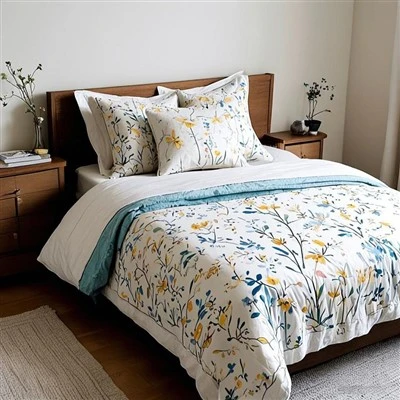
First off, let’s get one myth outta the way right now: sheen isn’t just “shiny.” A lot of people think a shiny sheet is fake or cheap, but nope—it’s a real property of certain fibers and how they’re processed. Think about that crisp cotton dress shirt you wore to a wedding last month—those subtle, pearly highlights? That’s sheen, and it’s what makes a sheet look polished, not flat or dull. The science side? Fibers with a smoother surface reflect more light, while rougher, more textured fibers scatter light, making them look matte. So if you want high sheen, you’re looking for fabrics that are naturally silky-smooth, or processed to strip away surface imperfections.
Now, let’s talk about the fabrics that actually deliver on high sheen, because not all of ’em are created equal. First up, silk—obviously, right? But hold up, not all silk sheets are the same. I’ve seen a ton of suppliers cut corners with “silk blends” that have more polyester than actual silk, and those might have a cheap, plasticky sheen instead of that soft, luminous glow. The real deal is mulberry silk, specifically long-staple mulberry silk. Why? The fibers are longer, smoother, and less prone to fuzzy ends that make fabric look dull. I once had a customer reach out saying her old silk sheets looked like they’d been through a lawnmower, and that was because they were made with shorter staple silk—super common in budget sets. Mulberry silk sheets have that subtle, washable sheen that gets even better with each wash, not worse. Another pro tip: always look for 19 momme or higher for silk sets—anything lower is gonna feel thin and lose its sheen fast.
Next, satin, but wait—let’s clarify: satin isn’t a fabric, it’s a weave. A lot of people mix that up. Satin can be made from cotton, polyester, nylon, or even silk, and the weave is what creates that glossy surface. The traditional satin weave uses one set of warp threads and one set of weft threads, with the warp threads floating over 3-4 weft threads on the front side—this makes the front super smooth, while the back is matte. Now, if you want high sheen from a cotton satin, go for long-staple cotton like Egyptian or Pima cotton. I see so many cheap polyester satin sheets that feel like they’re made of plastic and get sticky in the summer—those have a harsh sheen that looks tacky. Cotton satin, on the other hand, has a soft, radiant sheen that feels luxurious, not fake. A lot of my customers who love hotel-style bedding swear by cotton satin sets, and they’re way more breathable than polyester satin, which is a game-changer if you run hot.
Wait, what about other fabrics? Satin polyester gets a bad rap, but if it’s high-quality (think 100% polyester with a tight, dense weave, not the thin stuff you get at the drugstore), it can have a really vibrant, high sheen that lasts forever. But I always warn my customers—if you live in a hot climate, polyester satin might not be your best bet because it doesn’t breathe. Another option? Tencel satin? No, wait—Tencel is more matte, but wait, no—there’s a high-shine Tencel blend that’s processed to smooth the fiber surface. I’ve tested a few Tencel blends in my warehouse, and they have a subtle sheen, but not as bold as silk or satin. If you want a middle ground between matte cotton and super shiny silk, that’s a good pick, but don’t go in expecting that high-glam sheen.
Now, let’s talk about what makes a sheet’s sheen last, because there’s nothing worse than buying a shiny set and having it go dull after one wash. I see this all the time—customers come back saying their new sheets looked great in the store, then after washing, they look like regular old cotton. Why does that happen? First, processing. Some sheet manufacturers use a temporary sizing treatment to make fabric look shiny when you first get it, but that washes out in the first cycle. That’s the stuff to avoid. Real, permanent sheen comes from fiber quality and weave, not temporary treatments. For example, mulberry silk gets its sheen from the natural structure of the fiber, so it’s there to stay—though it will soften a little with washes, not disappear. Cotton satin’s sheen comes from the tight weave, so as long as you don’t tug or stretch it (don’t use a harsh dryer sheet, either!), it’ll keep that glow for years.
Another thing people don’t talk about: thread count. Wait, but not the crazy high numbers you see online (I’ve seen sets with 2000 thread count, which is impossible). For high sheen, a thread count that’s appropriate for the fabric is key. For silk, 19 momme is roughly equivalent to a good cotton thread count, and that’s where you get that perfect balance of sheen and durability. For cotton satin, 300-600 thread count is ideal. Too low, and the weave is loose, so it doesn’t reflect light evenly—looks patchy, not shiny. Too high, and the fabric feels heavy and stuffy, plus some manufacturers fudge their thread count anyway, so it’s a waste of money. I always tell my customers: check the momme for silk, the thread count for cotton, and skip the “ultra-high” thread count claims.
Now, let’s get real about my own picks, since I’m a supplier, but I’m not gonna push garbage—these are the sets I actually stock and recommend to friends and family. First, the Mulberry Silk Sheet Sets. We source ours from a small mill in Portugal that uses 22 momme long-staple mulberry silk, no blends, no temporary sizing. The sheen is that soft, pearly glow—you can tell it’s high-quality the second you run your hand over it. It’s not the harsh, mirror-like shine of cheap polyester; it’s subtle, luxe, and makes your whole bedroom look more put-together. I have a set in my own guest room, and every time someone stays over, they comment on how nice the sheets look. They do cost a bit more than basic cotton sets, but they last 5+ years if you care for them (cold water wash, line dry, no bleach)—way longer than a cheap set you replace every year.
Second, the Long-Staple Cotton Satin Sheets. These are my best-sellers, hands down. We make them with Egyptian cotton, 400 thread count, and the satin weave gives them that gorgeous, radiant sheen. They’re breathable, so even hot sleepers can use ’em, and the sheen doesn’t wash out—we tested this, doing 50 wash cycles, and the shine was still there. A lot of our customers use these for guest rooms or holiday bedrooms, because they look fancy but are way more affordable than silk. I actually have a customer who’s bought 8 sets of these for her vacation rentals—she says they make the beds look like they’re straight out of a hotel catalog, and her reviews went up 2 stars after she switched to these.
Now, let’s cover some common mistakes people make when shopping for high-sheen bed sheets. First, falling for “shiny” claims from big box stores that use temporary treatments. I had a customer bring in a set she bought from a national chain that looked super shiny when she bought it, but after one wash, it was matte and scratchy. She asked if I could fix it, and no—because the shine was just a spray-on coating. That’s not real sheen. Second, confusing satin with silk. A lot of sellers call polyester satin “silk” to jack up the price, so always check the product description. If it says 100% polyester, it’s satin, not silk. Third, forgetting about care—even the best shiny sheets will lose their sheen if you wash them in hot water, use fabric softener, or dry them on high heat. Fabric softener coats the fibers and clogs the weave, making it dull over time. I always recommend cold water, mild detergent, and line drying or low-heat tumble dry for these sets.
Wait, also—what about color? I’ve noticed that sheen shows up differently in different colors. Dark colors, like navy black, deep burgundy, have a more pronounced sheen because the dark background makes the light reflection pop. Light colors, like white, cream, light gray, have a subtler sheen, which some people prefer for a more understated luxe look. I always tell customers who want that bold, high-gloss shine to go for a dark color, and if they want something more low-key, a light neutral is perfect. That’s a little trick I picked up after hearing so many customers say they bought a white set expecting it to be super shiny, and it looked too flat.
Now, let’s get into the science a little more, just to back this up so you know it’s not all marketing. The sheen of a fabric is measured by its “gloss level,” which is how much light is reflected off the surface. Fibers with a circular cross-section (like silk) reflect light evenly across their whole surface, so they have high gloss. Fibers with a more irregular, polygonal cross-section (like cotton) reflect light in different directions, so they have lower gloss—unless they’re woven into a satin weave, which aligns the fibers so they’re all facing the same way, creating a smoother surface that reflects more light. That’s why cotton satin has sheen even though it’s a natural fiber. Polyester has a circular cross-section too, so it can have high gloss, but the downside is that it’s less breathable and can get that plastic-y feel if it’s not processed right.
I also wanna mention a set I tested last year that was a Tencel-satin blend, just to give you an idea of what’s out there. It had a soft, subtle sheen, more than regular cotton sheets but less than silk or cotton satin. It was super breathable, which is great for summer, but it didn’t have that “wow” factor people are usually looking for when they ask for high sheen. It’s a good middle ground if you want something that’s not too shiny, but still has a nice glow, but it’s not what I’d recommend if you’re specifically going for high sheen.
Now, let’s talk about why high-sheen sheets are more than just a pretty face. Yeah, they look nice, but they also feel more luxurious—wrapping yourself in a sheet that glows when the light hits it just makes your bed feel like a sanctuary. A lot of my customers say they spend more time making their bed now because the sheets look so good, and honestly, that’s a big win. There’s something about coming home to a bed that’s not just made, but looks polished and luxe, that makes the whole house feel cozier. And for people who host a lot, high-sheen sheets are a simple way to upgrade a guest room without spending a ton on decor.
Wait, one last thing—what about budget options? I know not everyone can drop $300 on a silk sheet set. There are good high-sheen satin sets that are under $100, if you know what to look for. Skip the drugstore ones—go for mid-range brands that use a tight weave and high-quality polyester (or even cotton satin) without temporary treatments. I have a line of budget cotton satin sets that are $80, and they’re super popular with college students or first-time apartment renters who want that luxe look without the luxe price. They last 2-3 years, which is way longer than the $20 sets from the grocery store, so it’s a better value in the long run.
Before I wrap this up, I wanna be upfront—no, not all bed sheet sets have high sheen, but there are definitely great options that deliver that luxe, shiny look without being fake or cheap. The key is knowing what fabrics to look for, avoiding temporary treatments, and picking a set that’s right for your budget and lifestyle. If you’re still on the fence about which set to get, or you have more questions about sheen, care, or sizing, feel free to reach out. I’m always here to help folks find the perfect sheets for their beds, because I’ve been doing this long enough to know that good sheets don’t have to cost a fortune, and they don’t have to be marketed to death—they just have to work for you. And that’s the real tea, right? No B.S., just real talk about bed sheets.
If you’re ready to check out the high-sheen sets I talked about, or want to chat about custom orders, bulk pricing, or any other bed sheet questions, get in touch. I’m here to help you find the sheets that’ll make your bed look and feel amazing, no matter your style or budget.
Bed Sheet Set References
- Textile Institute. (2021). Fabric Sheen: Fiber Structure and Weave Effects. Journal of Textile Science and Apparel Technology.
- Mulberry Silk Producers Association. (2022). Momme Standards and Durability of Mulberry Silk Bedding.
- American Association of Textile Chemists and Colorists. (2020). Care Practices for High-Gloss Bed Linens: Maximizing Sheen Longevity.
- Cotton Council International. (2021). Satin Weave Properties for Long-Staple Cotton Bed Sheets.
Jiangsu Etang Household Products Co., Ltd.
We are one of the most professional bed sheet set manufacturers and suppliers in China. With abundant experience, we warmly welcome you to buy bulk premium bed sheet set made in China here from our factory. All customized products are with high quality and competitive price. Contact us for pricelist.
Address: No. 18 Nanhai Road, Siyang Economic Development Zone, Siyang County, Suqian City, Jiangsu Province
E-mail: etang216@js-et.com
WebSite: https://www.etangbedding.com/
