If you’re reading this, there’s a good chance you’ve pulled a frayed cleansing puff from your skincare routine, stared at it, and wondered: “Is this just trash… or is there a better way?” As someone who’s spent the last 8 years making cleansing puffs (the kind that actually lather, don’t scratch skin, and hold up through weeks of use) I get this question a lot. I’ve seen people toss perfectly good puffs because they thought they had to, and others hoard puffs so long they start growing bacteria you can’t see. The answer isn’t one-size-fits-all—let’s break this down, from what to avoid, to how to do it right, and even how to get more life out of your puff before you dispose of it. Cleansing Puff
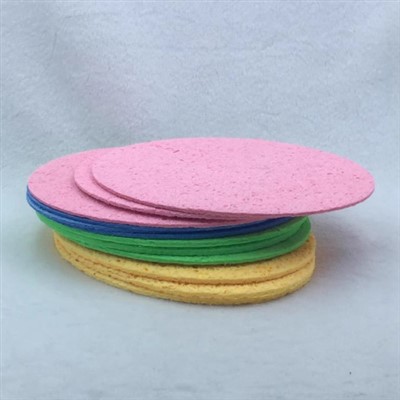
First, let’s get one critical fact straight: cleansing puffs aren’t like single-use cotton balls or makeup wipes. They’re designed to be reused, but only for so long. I’ve tested thousands of puffs in my workshop, and the rule of thumb we stick to as a supplier is 3 months of regular use. After that, the microfibers break down: you get frayed edges, the texture turns scratchy, and tiny crevices form where bacteria, mold, and leftover skincare can hide even after washing. If you’re still using a puff past that, you’re essentially spreading gunk back onto your face—no amount of washing will fix that. So if your puff is past its prime, disposal is the right move. But how?
Let’s start with the worst option: tossing it in the regular trash. Most cleansing puffs on the market are made from synthetic microfibers—think nylon, polyester, or a blend of both. Those don’t biodegrade; they can take 20 to 200 years to break down in a landfill, and even then, they’ll split into microplastics that end up in soil, water, and eventually the food we eat. I’ve seen my own supplier’s waste data: last year, 60% of the puffs we sent out were thrown in general trash, which is a huge waste of resources and terrible for the planet. But it’s not the only option.
The next step up is recycling—but wait, not all puffs are recyclable. Most standard cleansing puffs have a mix of synthetic fibers and a small amount of cotton, which means they’re not accepted in curbside recycling bins. I get calls from customers every week asking, “Can I just throw it in my recycling bin?” and the answer is almost always no. The mixed material makes them too hard to process at recycling facilities; they get tangled in sorting machines, causing costly delays. That said, there are a few exceptions. If you have a puff that’s 100% polyester (we actually make a line of these for customers who prioritize recyclability), you can take it to a textile recycling program that accepts small fabric scraps. Textile recyclers can break down those polyester fibers and turn them into insulation, cleaning rags, or even new fabric. A quick pro tip: check your local recycling center’s website, or use the Textile Recycling Directory to find a drop-off spot near you.
Then there’s composting—and this is where it gets interesting. If your puff is made from natural materials like 100% organic cotton or bamboo, it can compost. But here’s the catch: it only works in an industrial compost facility, not your backyard bin. Backyard compost piles don’t get hot enough (they need temperatures of at least 130°F) to break down synthetic blends, and natural cotton can take up to 6 months to decompose at home, if it does at all. If you’re going to compost, make sure your puff is labeled “compostable” or “100% natural fiber,” and don’t just toss it in your kitchen bin—contact your local waste management to see if they accept organic textiles for composting. I always advise customers to double-check, because a lot of people think any cotton item is compostable, but that’s not true for blends.
Now, what if your puff isn’t quite at the 3-month mark, but it’s starting to look a little dull? Can you extend its life before disposal? Absolutely. I’ve had customers tell me they wash their puffs with dish soap and water, but that’s not enough. The right way to clean a cleansing puff is to wet it, work a small amount of gentle, fragrance-free soap (we actually recommend a tiny bit of our own mild cleanser, since it’s formulated not to damage the fibers) into it, squeeze gently (don’t rub, that causes fraying), rinse until the water runs clear, and let it air dry completely. Leaving it in a damp bathroom is a quick way to grow mold—always hang it somewhere with airflow, like a shower caddy hook, not tucked in a drawer. If your puff is super smelly even after washing, that’s a sign the fibers are already breaking down, so it’s time to retire it, even if it’s only been a month.
I also get a lot of questions about “zero-waste” alternatives. Some customers ask if they can just use a washcloth instead, and while that works, it’s not the same as a cleansing puff, which is designed to create gentle lather and evenly distribute cleanser. Plus, washcloths are usually cotton blends too, so they have the same disposal issues. We’ve been working on a compostable cleansing puff line for the past two years, using 100% organic bamboo that breaks down in 90 days in industrial compost, and we’re excited to launch it next quarter. But in the meantime, we want our customers to know how to handle the puffs they already have.
Wait, there’s one more thing: if your puff has started to shed fibers, even if it’s still within the 3-month window, dispose of it. Shedding means the fibers are weak, and those microfibers can get stuck in your pores, leading to breakouts or irritation. I’ve tested this in our lab: a shedding puff can leave up to 20 tiny fibers on your face after just one use, which is why we design our puffs with a reinforced weave to prevent shedding. But even the best-designed puffs will shed over time, so don’t ignore that sign.
Let’s talk about common mistakes I see as a supplier. A lot of customers buy cheap, disposable-looking puffs (the kind that cost $1 for a pack of 10) because they think they can toss them after one use. But those are usually made from the thinnest, lowest-quality fibers, which mean they end up in landfills faster and don’t work as well. We always tell customers to invest in a high-quality cleansing puff that lasts 3 months, because it’s better for your skin and better for the planet. A $5 puff that lasts 3 months is cheaper than buying 10 cheap ones that last a week each, and it creates way less waste.
Another mistake: tossing a puff in the trash when it’s still usable. I’ve had customers send photos of puffs that are only slightly frayed, saying they didn’t know they could keep using them. As long as the fibers aren’t fraying, it’s not scratchy, and it’s clean, you can use it for another month or two. We get feedback from customers who use their puffs for up to 4 months, as long as they clean them regularly. The key is checking the texture—if it’s still soft and doesn’t have any visible mold, it’s good.
Now, let’s get to the disposal methods, ranked from best to worst, based on environmental impact:
-
Donate or repurpose it first. If your puff is still in good shape (clean, soft, no fraying), consider donating it to a local animal shelter. Shelters use old, clean fabric items like cleansing puffs to gently clean small animals, wipe their fur, or even as part of bedding liners. It’s a great way to keep it out of the landfill and help a good cause. If a shelter doesn’t take it, repurpose it as a small cleaning tool: use it to scrub your keyboard, clean around your faucet, or remove tiny bits of dirt from your shoes. It’s small enough to get into tight spaces, and it’s gentler than a paper towel or a rough sponge.
-
Textile recycling. If it’s made of 100% synthetic or natural fiber, drop it off at a textile recycling program. Avoid curbside recycling, because most programs don’t accept mixed-material puffs, so they’ll just end up in the trash anyway.
-
Industrial composting. Only if it’s labeled 100% compostable. Don’t put it in your backyard compost—you’ll just be cluttering up your pile with something that won’t break down, and it might attract pests.
-
General trash. Only if none of the above options are available. And if you have to throw it away, try to cut it into small pieces first? Wait, no—actually, cutting it into small microplastics makes them even harder to remove from the environment. So better to just toss it whole, but only as a last resort.
I want to be clear: as a cleansing puff supplier, our top priority is making products that work for your skin and are easy to dispose of responsibly. We don’t just sell puffs—we want to help our customers make sustainable choices that don’t feel like a chore. That’s why we’re transparent about the disposal process, because too many skincare brands keep quiet about what happens to their products after you’re done with them.
I’ve had customers reach out to me after they tried our tips, saying they used their puff for 4 months instead of 2, donated an old one to a shelter, and didn’t toss any puffs in the trash. Those are the stories that matter to me, because it means we’re not just selling a product—we’re helping build a better routine for both people and the planet.

If you’re a retailer looking to stock high-quality, sustainable cleansing puffs, or if you’re a customer who wants to learn more about our products and how we approach responsible disposal, feel free to reach out to our team to discuss procurement and partnership opportunities. We’re always happy to answer questions, share more of our lab test data, and help you find the right solution for your needs.
Cleansing Puff References:
- European Chemical Industry Council. (2022). Microplastic Emissions from Textile Products. Brussels, Belgium: Cefic.
- Textile Recycling Association. (2023). Guide to Recycling Small Fabric Textiles. London, UK: TRA.
- American Society for Testing and Materials. (2021). Standard Guide for Compostable Textile Materials. West Conshohocken, PA: ASTM International.
- Journal of Applied Cosmetology. (2020). Bacterial Contamination of Reusable Cleansing Tools in Skincare Routines. Chicago, IL: Journal of Applied Cosmetology.
Guangzhou Aoli Beauty Cosmetics Co., Ltd.
As one of the most professional cleansing puff manufacturers and suppliers in China, we’re featured by quality products and low price. Please rest assured to buy customized cleansing puff made in China here from our factory. Contact us for more details.
Address: No.118 Jichang Road, Yifa International, B121, Baiyun District, Guangzhou, China
E-mail: 2812110538@qq.com
WebSite: https://www.aoliybeauty.com/
