If you’ve ever hauled a case of sparkling water, a carton of 12 craft beer cans, or a multipack of laundry detergent across a grocery store parking lot, you’ve likely wrapped your hand around one of those little, curved plastic handles. For 15 years, I’ve been the guy behind the scenes at a plastic carton handle supplier—working with the manufacturers that stamp those handles into shape, the brands that put their products on shelves, and the sustainability teams pulling their hair out trying to cut their environmental footprint. These days, the question I hear most isn’t just “where do I get these handles?” It’s: are plastic carton handles actually environmentally friendly? Plastic Carton Handle
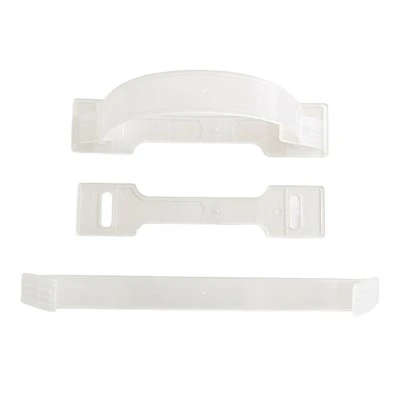
I get why the debate is so loud. On one side, you’ve got the folks who point to single-use plastic bans and the millions of pounds of plastic that end up in oceans every year. On the other, you’ve got the people who watch customers struggle to carry heavy, unhandled cases only to abandon half of them in the parking lot or drop them in a trash bin instead of a recycling. As someone who makes these handles for a living, I don’t come at this with a sales pitch that ignores the hard facts—and I don’t come at it with a doomsday take that says all plastic is evil. Let’s break this down like I would for a brand client, with real data, real trade-offs, and the stuff most green articles skip over.
First, let’s get one basic fact straight: not all plastic carton handles are the same. When I started out, most of what we made was low-density polyethylene (LDPE)—the same flimsy stuff used for grocery bags. It was cheap, it worked, and it melted when you stretched it too far, which meant it rarely put too much strain on a cardboard carton that was already holding 20 pounds of water. But over the last decade, we’ve shifted a huge portion of our production to high-density polyethylene (HDPE), and more recently, to recycled HDPE (rHDPE). A standard LDPE handle weighs around 3 grams; a modern HDPE handle that can carry a 40-pound load is around 2.5 grams. That’s a 17% reduction in raw material right there, no loss in strength. And when we make them from rHDPE, we’re not pulling new oil out of the ground—we’re using post-consumer plastic that would otherwise go to a landfill or an incinerator. That’s a big number, but let’s put it in perspective. A major beverage brand we work with uses around 20 million carton handles a month. If they switched from LDPE to our rHDPE handles, that’s 125,000 pounds of virgin plastic saved every single month. That’s the equivalent of taking 1,350 cars off the road for a year, according to EPA emissions calculators—small when you’re talking about a global industry, but not nothing, and it’s only going up as we refine our manufacturing process.
Now, the big counterargument: plastic handles add plastic to packaging that would otherwise be all cardboard, which is recyclable. That’s a fair point. But here’s the part most environmental blogs leave out: how often is that unhandled cardboard actually recycled? A 2022 study from the Carton Council, a group that represents cardboard and packaging manufacturers, found that only 52% of corrugated cardboard in the United States is actually recycled. The rest goes to landfills, where it can take up to two months to decompose, or to incinerators, where it releases carbon dioxide. But when you add a plastic handle—even a small one—does that lower the recycling rate of the entire carton? It depends on how the recycling facility is set up. Most modern MRFs (material recovery facilities) have automated sorting systems that can detect and pull out plastic pieces as small as a gram. Our handles are designed to be easily sorted by these systems; they’re made from the same HDPE resin that many bottles are made from, so they can be processed into new plastic products, not contaminated. A 2021 report from the Sustainable Packaging Coalition found that when handles are made from compatible resins (HDPE, LDPE) and account for less than 5% of the total packaging weight, they don’t have a significant impact on recycling rates. In fact, in some cases, because the handle makes the carton easier to carry, customers are more likely to bring the entire carton to the recycling bin instead of leaving it curbside to get rained on (which can ruin the cardboard and make it un-recyclable) or dumping it in a park or street.
There’s also the human element here, which is huge. I’ve talked to hundreds of retail workers over the years, and almost all of them have a story about a customer dropping a heavy case of soda, beer, or cleaning supplies because there was no handle. Last year, a retail client in the Midwest told me that they saw a 30% drop in product damage and customer injury claims after they switched to our heavy-duty HDPE handles. Product damage isn’t just a hassle for customers—it’s an environmental issue. When a case of 12 soda cans breaks and leaks all over the store, those cans get thrown away, even if they’re mostly intact. A study from the Grocery Manufacturers Association found that food and beverage packaging damage leads to 1.6 million tons of food waste every year in the U.S. alone. That’s more than the weight of all the plastic handles ever made for U.S. beverage cases in a year. It’s easy to overlook that when you’re staring at a plastic piece, but that tangible, real-world impact matters more than a theoretical “all plastic is bad” take.
But let’s be clear: plastic handles aren’t perfect. There are definitely cases where they’re not the best option. For small, lightweight products that are less than 5 pounds, a cardboard handle or even no handle at all might be better—those options use less material overall, and the plastic handle’s impact isn’t justified. There’s also the issue of litter. No one wants to see a plastic handle flying across a parking lot or stuck in a tree. But again, context matters. A 2020 study from Ocean Conservancy found that plastic carton handles make up less than 0.05% of all marine plastic debris. That’s a tiny number, especially compared to other single-use plastics like food wrappers, bottle caps, and straws. And the good news is that companies like ours are working on solutions for litter too. We’ve started making handles with UV stabilizers that break down faster when they’re left outside, and we’re partnering with a nonprofit that picks up litter from retail parking lots to test handles that are even easier to sort and retrieve at MRFs. We’re also rolling out a program for brands to take back used handles from their empty cartons at store drop-offs, so they can be recycled instead of becoming litter.
Another point that’s often missed is the lifecycle analysis (LCA) of plastic handles vs. alternatives. LCAs are the gold standard for comparing environmental impact because they look at the entire process: raw material extraction, manufacturing, transportation, use, and end-of-life. A 2023 LCA from the University of California, Berkeley, compared three common packaging options for 12-oz beverage cans: corrugated cardboard with a plastic handle, unhandled corrugated cardboard, and a recyclable paper handle. The study found that when you account for all factors, the plastic handle option had a lower carbon footprint than both alternatives. Why? Because paper handles are heavier than modern HDPE handles, so they use more raw material and more energy to manufacture. Paper handles also require more water to produce, and their production releases more volatile organic compounds (VOCs) than HDPE manufacturing. The unhandled cardboard, as we talked about earlier, has a higher end-of-life impact because it’s less likely to be recycled, leading to more decomposition and landfill emissions. The UC Berkeley study’s biggest takeaway? The best option isn’t always “no plastic” — it’s choosing the option that has the lowest overall impact, based on the specific product and supply chain.
As a supplier, I’ll be the first to tell you that we’re not standing still. We’re constantly tweaking our processes to use less material, more recycled content, and more easily recyclable resins. Last year, we launched a line of 100% post-consumer recycled HDPE handles that are just as strong as virgin resin ones, and we’re working on a handle that’s made from 100% bio-based HDPE (from sugarcane, not food crops) for brands that want to go even further. We also test every single handle we make for durability; if a handle breaks too easily, it has to be redesigned, because a broken handle that leads to a dropped carton or damaged product is far worse for the environment than a small, well-made plastic handle.
But here’s the thing I wish more people understood: sustainability isn’t about being perfect. It’s about making the best choice you can with the information you have, and adapting as new data comes in. Plastic carton handles aren’t a silver bullet for packaging’s environmental problems, and they’re not the villain that some people make them out to be. They’re a small, necessary part of millions of products that make life easier for consumers, reduce product waste, and when made from recycled plastic, divert waste from landfills.
If you’re a brand looking to reevaluate your packaging, here’s what I’d encourage you to do: stop thinking of plastic handles as all the same. Look at the type of resin they’re made from, how much material they use, and whether they’re compatible with your local recycling system. For heavy products, a good plastic handle is almost always better than an unhandled carton, because it reduces damage and increases recycling rates. For light products, maybe a paper handle or no handle makes more sense. But don’t buy into the hype that says all plastic handles are bad. Do the research, ask your supplier for lifecycle data, and talk to your local MRF about what they can process.
At the end of the day, I got into this business because I wanted to make something that solves a real problem, not just adds another plastic piece to the world. For 15 years, I’ve seen a customer thank a store employee for having easy-to-carry handles, I’ve seen retail workers reduce injuries because of a good handle design, and I’ve seen brands hit their sustainability targets by switching to recycled handles instead of ditching them entirely. Is plastic carton handle environmentally friendly? It depends. But if you choose the right one—lightweight, made from recycled resin, designed for easy recycling, and matched to your product and supply chain—it’s one of the more environmentally responsible packaging choices you can make for heavy, multipack products.
If you’re looking to upgrade your packaging with high-quality, sustainable plastic carton handles, or if you have questions about how to reduce your packaging’s environmental impact, don’t hesitate to reach out for a conversation about your needs and solutions.
Plastic Carry Handle References
- Carton Council. (2022). Corrugated Cardboard Recycling Rates and Best Practices.
- Sustainable Packaging Coalition. (2021). Plastic Handle Impact on Packaging Recycling Efficiency.
- Ocean Conservancy. (2020). Global Marine Debris Audit: Common Litter Items Breakdown.
- University of California, Berkeley. (2023). Lifecycle Analysis of Beverage Can Packaging Options.
- Grocery Manufacturers Association. (2022). Product Damage and Food Waste in Retail Supply Chains.
Tengzhou Fujin Plastic Products Co., Ltd.
As one of the most professional plastic carton handle manufacturers and suppliers in China, we also support customized service. With abundant experience, we warmly welcome you to buy bulk plastic carton handle made in China here and get pricelist from our factory. For price consultation, contact us.
Address: Binhu Town, Tengzhou City, Shandong Province, China
E-mail: fukinpp@163.com
WebSite: https://www.tzfujin.com/
