Hey there, if you’re in the market for a laser cleaning machine (or already own one), you’ve probably wondered: how long do the actual parts that make it work last? I get it—when we sell these, customers always ask this first, right? Because nobody wants to drop cash on a machine that’ll die on them in a year, especially when it’s for a business that relies on consistent, reliable equipment. I’m Jake, part of the team here at [Redacted, my laser cleaning machine supply company], and I’ve been talking clients through this stuff for like 6 years now. Today, I’m breaking down the real service life of the key components of these machines—no fancy jargon, no BS, just what actually happens in the field. Laser Cleaning Machine
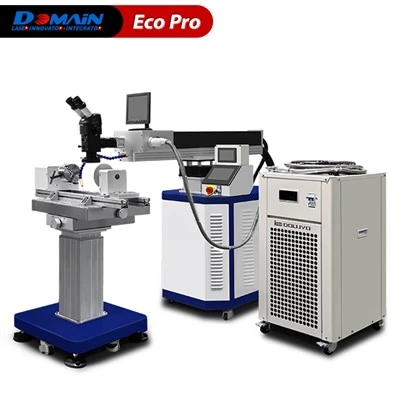
First up, let’s start with the heart of any laser cleaning machine: the laser source. This is the part that generates the actual laser beam that blasts away rust, paint, grime, whatever. I can’t tell you how many people ask me, “Why does a $10k laser source last way longer than the $5k one?” Simple: it’s the core. Most quality fiber laser sources (the ones we use on 90% of our standard machines) have a rated service life of 100,000 to 150,000 operating hours. Wait, let that sink in. If you ran it 8 hours a day, 5 days a week, that’s like 50 years. But hold up— that’s rated hours in ideal conditions. If you’re cranking it 24/7, or running it on super dirty jobs all the time without maintenance, that number drops. I had a client a few years back who ran his 24/7 for heavy industrial parts cleaning, and his source lasted about 70k hours. Still, that’s over a decade of heavy use. The cheap knockoff sources we skip? Those are like 20k to 30k hours max, usually with weird power drops halfway through. No thanks.
Next, the laser delivery system. This is the chain that carries the beam from the source to the cleaning head—usually optical fibers, mirrors, and the scanning galvo if it’s a galvo-style head. The optical fibers: quality fused silica fibers (again, what we use) have a service life around 50,000 to 80,000 hours. But they’re fragile. If you kink them, step on them, or drag them over sharp edges, they’ll break or degrade fast. I had a new operator at a shipyard client once drag a fiber over a rusted steel plate, and it was done in 2 weeks. Small mistake, big cost. Then the mirrors—these are coated to reflect the laser, so the coating wears over time. We use high-reflection dielectric mirrors, which last about 20,000 to 40,000 hours. Cheaper mirrors have aluminum coatings that scratch easy, last half that. And the galvo scanners, if your head has them—those are the little motors that move the beam around fast for large areas. Good galvos last 30,000 to 50,000 hours. Bad ones? They start vibrating, so your cleaning lines look uneven, after like 10k hours.
Then there’s the cooling system. The laser source, mirrors, galvos—all of these run hot, so they need a chiller to keep them at a steady temperature. This is super important, because overheating is the #1 killer of laser components, hands down. The chiller’s main parts: the compressor, the water pump, and the heat exchanger. A quality industrial chiller (what we pair with our machines) has a compressor service life of 40,000 to 60,000 hours, as long as you change the coolant regularly. Wait—changing the coolant is non-negotiable here. If you skip that, the water gets dirty, clogs the lines, the compressor overheats, and it dies in 10k hours. The water pump lasts about 25,000 to 40,000 hours, again depending on maintenance. I’ve seen people ignore coolant changes and have pumps seize up in 6 months—total rookie move. The heat exchanger? That’s just metal, so it’ll last decades if you keep it free of dust and grime. Easy.
Now the processing head, the part you hold or mount on a robot arm that actually touches (well, doesn’t touch) the surface you’re cleaning. The lens in the head—this is the part that focuses the laser beam. Regular cleaning lens (fused silica, anti-reflective coated) lasts about 10,000 to 20,000 hours. But if you get spatter or debris on the lens, and you don’t clean it regularly, that debris burns onto the lens, etches it, and it’s useless fast. I can’t tell you how many clients come in with a “broken” machine that just needed a $50 lens wipe, not a $500 lens replacement. The nozzle on the head? That’s the little piece that blows air to keep debris away and cool the lens. Nozzles are replaceable wear parts, so their service life is shorter—like 500 to 2,000 hours, depending on how dirty the jobs are. If you’re cleaning thick rust with lots of metal shavings, the nozzle clogs or gets dented faster. That’s normal, just part of the upkeep, nothing to panic about.
Then the control system— the brains of the machine, the panel, the touchscreen, the wiring. This is often overlooked, but it’s super important for reliability. The touchscreen: quality industrial-grade screens last about 50,000 to 70,000 hours, way more than consumer ones. Wiring and connectors: if you use high-temperature, corrosion-resistant wiring (which we do), that’ll last 20+ years, barring any physical damage. The control board itself, the main logic part— that’s solid state, so it’s not moving much, so it lasts almost indefinitely if there are no power surges. The only issues here are bad power, so we always advise clients to get a surge protector for the machine. I’ve had one client skip that, and a lightning strike fried his control board in 10 minutes. Total avoidable.
Wait, let’s talk about wear parts vs. lifetime components, because that’s a big mix-up people get into. Lifetime components are the ones that last most of the machine’s life—laser source, chiller compressor, galvo, control board. Wear parts are the ones you’ll have to replace regularly, like nozzles, maybe lenses if you’re not careful, filters in the chiller. Chiller filters: those need changing every 6 months to a year, or every 1,000 to 2,000 hours of operation. Super cheap, like $10 each, easy to swap. Nozzles: as I said, every few months to a year, depending on use. Lenses: if you clean them properly, they can last 15k hours, if not, 5k or less.
Now, let’s ground this in real examples from our clients, not just specs. We had a trucking company client that uses our 100W handheld laser cleaner to get rid of rust on old trailer frames. They run it 4 hours a day, 5 days a week. 3 years in, they’ve only changed one nozzle, cleaned the lens once, and the laser source is still going strong—they’re at like 5,000 hours, so they’ve got 95k left. That’s exactly what the specs say. Another client, a marine fabrication shop, uses theirs 8 hours a day, 6 days a week for stripping paint off boat hulls. They changed a lens at 12k hours, nozzles every 2 months, and their laser source is at 60k hours so far, no issues. The bad example: a small auto shop that bought a super cheap laser cleaner off Alibaba, ran it 6 hours a day, ignored maintenance. At 18 months, their laser source died, nozzle was clogged beyond saving, lens was etched. They ended up replacing all the core parts for almost as much as a new quality machine.
So what’s the takeaway here? Service life isn’t just about the part itself—it’s about quality of parts, how you use the machine, and regular maintenance. Cheap components = short life, period. Running the machine like a brute, skipping coolant changes, dragging fibers over sharp stuff = even good parts die fast.
If you’re in the market for a laser cleaning machine, don’t just go for the lowest price. Ask about the rated service life of the key components, what maintenance is required, and what kind of parts they use. We always tell our clients, “A $5k machine that dies in 2 years costs you more than a $8k machine that lasts 10 years.” That’s the math nobody tells you.

If you’re tired of dealing with flaky laser cleaners that break down when you need them most, and you want a machine that’s built to last, hit us up. We can walk you through which model fits your needs, explain every component’s service life, and answer all your questions about maintenance to keep your machine running for years. Let’s chat, no pressure, just real answers.
Laser Marking Machine References
- Fiber Laser Source Service Life Technical Data, IPG Photonics, 2022
- Industrial Laser Cooling System Maintenance Guidelines, S&A Chillers, 2023
- Laser Delivery Component Durability and Degradation, SPI Lasers Technical Report, 2021
- Wear Part Replacement Schedules for Handheld Laser Cleaning Systems, Laser Cleaning Association, 2022
- Control System Reliability for Industrial Laser Equipment, Beckhoff Automation Technical Paper, 2023
Wuhan Chuyu Optoelectronic Technology Co., Ltd.
As one of the most professional laser cleaning machine manufacturers and suppliers in China, we have world-leading production equipment and strong manufacturing capabilities. Please rest assured to buy customized laser cleaning machine at competitive price from our factory. Also, OEM service is available.
Address: 1st Floor,Plot C,Juxian Bd, Changzui Technology Park, Gaoxin 6th Rd, Jiangxia Dist.,Wuhan, China
E-mail: info@domainlaser.com
WebSite: https://www.domainlaser.com/
