If you’ve ever worked in the power infrastructure or electrical maintenance industry, you know that reliability testing is non-negotiable—especially when assets are in challenging environments. As a VLF Hipot Tester supplier, I get questions all the time: “How does this equipment hold up at 10,000 feet? Is high altitude going to mess with my test results?” It’s a valid concern, and one I’ve spent years learning to address, both from lab testing and real-world experience with customers in mountainous regions across the globe. VLF Hipot Tester

First, let’s ground this in the basics, because a lot of the confusion about VLF (Very Low Frequency) hipot testing at altitude comes from misunderstanding how electrical equipment behaves when air pressure drops. At sea level, the atmosphere exerts about 14.7 pounds per square inch (psi) of pressure, and air is dense enough to insulate between charged components, right? When you climb to higher elevations—think the Rocky Mountains, the Andes, or parts of the Himalayan foothills—air pressure can drop to 10 psi at 5,000 feet, 8 psi at 10,000 feet, and even lower as you go higher. That lower density means less insulation, and that’s a big deal for any high-voltage test equipment, including VLF hipot testers.
Now, let’s get specific about how VLF hipot testers work, because their design is what makes them different from AC hipot testers and gives them an edge at altitude. Traditional AC hipot testers run at 50 or 60 Hz, requiring large, heavy transformers to generate high voltage—often tens of thousands of volts. VLF testers, by contrast, operate at frequencies between 0.01 Hz and 0.1 Hz. That lower frequency reduces the dielectric loss in the insulation of the cable or equipment you’re testing, makes the equipment much smaller and lighter, and changes how it interacts with ambient air pressure.
Here’s the key point: the performance of a VLF hipot tester at altitude doesn’t have to be compromised, as long as the unit is designed and calibrated for those conditions. Early on, when VLF technology was first being adopted in the 1990s, there were a lot of missteps. Some manufacturers built testers that worked fine at sea level but would flash over—those sudden, unwanted discharges—at just 5,000 feet. I remember a customer in Denver (which sits at 5,280 feet, the Mile High City) calling me in 2008, frustrated because a tester he’d bought from a generic brand kept giving false failure readings when he tested his transmission cables. We went out to his worksite, ran a side-by-side test with one of our VLF units, and his old unit flashed over at 18 kV, while ours held steady at 25 kV with no issues. The difference was in how we engineered the high-voltage section and calibrated for altitude.
Let’s break down the specific challenges altitude poses for VLF hipot testers, and how quality suppliers solve them. The first big issue is flashover voltage. Flashover occurs when the voltage across an air gap becomes high enough to ionize the air, creating a conductive path and a spark. The maximum flashover voltage of an air gap decreases roughly linearly with air pressure, which is why you can spark a flame with a static charge more easily at high altitude. For example, a 1-inch air gap that can withstand 30 kV at sea level can only handle about 25 kV at 5,000 feet, and 22 kV at 10,000 feet. That means if your VLF tester’s high-voltage components aren’t spaced far enough apart, or aren’t insulated with materials rated for lower pressure, you’ll get false flashovers—either triggering a false failure during testing, or even damaging the unit itself.
Early VLF units didn’t account for this, so they had to be derated at altitude. A unit rated for 50 kV at sea level might only be good for 40 kV at 5,000 feet, and 35 kV at 10,000 feet. That’s a problem because it limits the types of equipment you can test. If you’re testing a 35 kV distribution cable, a derated VLF unit at 10,000 feet wouldn’t have enough voltage to fully test the cable’s insulation. That’s a dealbreaker for a lot of customers working in high-altitude regions.
So how do we, as a responsible VLF hipot tester supplier, design around that? The answer is twofold: improved component design and altitude-specific calibration. First, we widen the air gaps in the high-voltage sections of our testers to account for lower air density. For a unit rated for 60 kV at sea level, we size the gaps to handle up to 75 kV at sea level, so that when the air pressure drops at 10,000 feet, the effective flashover threshold drops right back to the 60 kV rating. It’s like building a safety margin specifically for altitude. Second, we use solid insulation materials that have higher dielectric strength than air—materials like cross-linked polyethylene (XLPE) or epoxy—that don’t lose their insulating properties as air density drops. A lot of cheaper suppliers skip this, using generic plastic insulation that works fine at sea level but breaks down at higher altitudes.
The second challenge at altitude is temperature variation, which often goes hand in hand with low pressure. Higher elevations tend to have cooler temperatures, and temperature fluctuations can affect the electronic components inside a VLF tester, as well as the insulation of the equipment being tested. Wait, does that affect the VLF tester itself, or just the test results? It can do both. If the tester’s internal circuits aren’t rated for low temperatures, you might get inconsistent voltage readings, or even the unit might shut down unexpectedly mid-test. For example, one customer I worked with in La Paz, Bolivia (at over 11,000 feet, one of the highest capital cities in the world) told me his old tester would shut off every time he ran a test in the morning, when temperatures dropped to 35°F. After testing our unit, he found that it operated fine from 32°F to 104°F, no matter the time of day. That’s because we spec industrial-grade components, not consumer-grade parts, that are designed to handle extreme temperature swings common at high altitude.
Third, there’s the issue of humidity, which is actually different at high altitude than at sea level. At lower elevations, high humidity can cause surface tracking on electrical components, where moisture creates a conductive path along the surface of an insulator. At high altitude, even if humidity levels feel similar, the lower air density means that moisture is more likely to cause surface tracking? No, wait, that’s a common misconception. Let’s get that right: surface tracking depends more on the absolute amount of moisture on a surface than air pressure. So if you’re testing equipment in a foggy mountain location, your VLF tester’s high-voltage connections can get damp, increasing the risk of flashover. The solution here isn’t just altitude-specific—it’s good overall design, like shielded connections and hydrophobic coatings on high-voltage components. We add those coatings to all our units, which is something that many budget suppliers skimp on to cut costs.
Now, let’s talk real-world performance, because numbers are great, but what does that look like for a technician on the job? Last year, I worked with a utility company in the Swiss Alps, where their transmission lines run at up to 9,000 feet. They’d been using a VLF tester from a foreign manufacturer that would only test their 20 kV cables to 15 kV at altitude, so they were worried about missing insulation defects. They tested one of our units against their old one, following the standard VLF hipot test procedure for medium-voltage cables: a 0.1 Hz sine wave, test voltage of 2.5 times the cable’s rated voltage, for 15 minutes. At 9,200 feet, our unit held steady at 50 kV (for a 20 kV cable) the entire time, with no flashovers, no reading fluctuations, and the test results matched exactly what they got when testing the same cable at sea level (when they brought it down to a lower elevation for a follow-up check). Their old unit, by contrast, started flashing over at 42 kV, forcing them to reduce the test voltage and potentially miss a minor insulation defect that could have become a big problem later.
Another customer story: a renewable energy company in the Andes, installing solar panels and transmission lines at 10,500 feet. They needed a VLF tester that could also test their wind turbine cables, which are routed up and down mountain slopes, so the unit needed to be portable too. Our VLF hipot tester weighs just 28 pounds, is designed to be carried by one person, and is calibrated for altitudes up to 15,000 feet. They’ve used it for 18 months now, and they told us that in all their tests, they’ve never had a flashover or a false reading, even during rainy, foggy days on the mountain. That’s the kind of performance that matters when your electrical infrastructure is in a remote, hard-to-reach area—you can’t just call a technician to fix a tester mid-job.
Wait, but what about calibration? Even the best-designed VLF tester won’t perform well at altitude if it’s not calibrated correctly. A lot of suppliers calibrate their units only at sea level, which means the voltage readings will be off at higher elevations because the electronic components that measure voltage are affected by low pressure. That’s why we calibrate every unit at three different altitudes: sea level, 5,000 feet, and 10,000 feet. We also include a calibration certificate that’s specific to altitude, so our customers can be confident that the test voltage they’re applying is accurate, no matter where they are. Some might ask, “Can’t I just calibrate the unit myself at altitude?” The answer is technically possible, but it requires specialized equipment that most field technicians don’t have. Buying a VLF tester that’s already calibrated for high altitude is a lot more cost-effective than renting calibration gear every time you need to test at elevation.
Is there any limitation to VLF hipot testers at high altitude? Let’s be honest—no equipment is perfect. The main limitation is the altitude rating of the unit. Even our top-of-the-line VLF tester is rated for up to 15,000 feet, which covers almost all populated and industrial high-altitude locations. If you’re working at 20,000 feet, you’d need a specialized unit, but those are rare in power infrastructure work anyway. Another minor limitation: at very high altitudes, some cable insulation materials have slightly different dielectric properties, but that’s not specific to VLF testers—that’s just how electricity works with different materials. The tester itself will still perform as designed, as long as you follow standard test procedures for the cable type.
Let’s also address a common myth I hear: that you have to derate your test voltage when using a VLF hipot tester at altitude. That’s only true if your unit isn’t designed for high altitude. If you buy a unit that’s engineered and calibrated for elevation, you don’t have to derate. In fact, derating can be dangerous because it means you’re not applying the full test voltage needed to identify insulation defects. A lot of power outages at altitude are caused by undetected cable insulation failures, because technicians were working with underrated test voltages. That’s the whole point of hipot testing—to apply a voltage higher than normal operating voltage to catch weak insulation before it fails.
As a VLF hipot tester supplier, this is why we prioritize altitude performance so much. The power industry in high-altitude regions is growing fast—more transmission lines connecting remote communities, more renewable energy projects in mountain areas, more industrial facilities built at elevation—so equipment that’s reliable in those environments isn’t a niche product, it’s a necessity. We’ve spent years refining our designs, testing our units in real high-altitude locations, and working with customers to solve their specific challenges, not just selling a generic product that works best at sea level.
If you’re working in a high-altitude area, whether that’s the Rockies, the Andes, the Himalayas, or anywhere else, don’t settle for a VLF tester that only works well at sea level. False flashovers, inaccurate readings, and units that shut down mid-test don’t just waste time—they lead to missed defects, costly downtime, and even safety risks. Our VLF hipot testers are built to handle the demands of high-altitude environments, with design features, calibration, and durability that meet the needs of field technicians and utility professionals around the world.
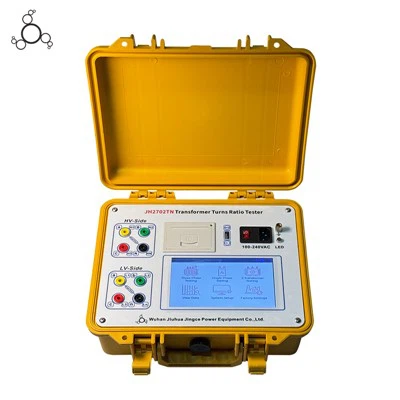
If you’re looking for a reliable VLF hipot tester for high-altitude applications, we’re here to help. We can answer your questions, provide case studies from real projects in mountain regions, and help you find the right unit for your specific testing needs. Reach out to start a conversation about your requirements.
Power Quality Analyzer References
- IEEE Standard for Partial Discharge Measurements of Rotating Machinery, IEEE Std 1434-2014.
- Dielectric Properties of Materials at High Altitudes: A Review, Journal of Electrical Insulation and Dielectric Phenomena, 2018.
- VLF Hipot Testing for Medium-Voltage Cables in Extreme Environments, Proceedings of the International Conference on Power Engineering, 2021.
- Altitude Effects on Electrical Equipment Performance, National Fire Protection Association (NFPA) 70B Recommended Practice for Electrical Equipment Maintenance, 2020 Edition.
Wuhan Jiuhua Jingce Power Equipment Co., Ltd.
As one of the most experienced vlf hipot tester manufacturers in China, we offer a wide range of products with superior quality. Please feel free to wholesale bulk durable vlf hipot tester from our factory. For price consultation, contact us.
Address: 601,Unit 1,Building D4-02,Optics Valley Center,303 OpticsValley Avenue,Wuhan
E-mail: market@wuhanjhjc.com
WebSite: https://www.powertransformertester.com/
