Hey there! I’m a supplier of flushable nonwoven fabric, and today I wanna chat about the UV – resistance properties of this amazing product. Flushable Nonwoven Fabric

So, first off, let’s talk about what flushable nonwoven fabric is. It’s a type of fabric that’s designed to break down in water, which makes it super convenient for use in things like wet wipes and other disposable products. But when it comes to its UV – resistance, there’s a lot more to it than meets the eye.
UV rays, as we all know, can be pretty harsh on materials. They can cause fading, degradation, and even weaken the structure of the fabric over time. For flushable nonwoven fabric, this is a big deal because it might be exposed to sunlight during storage, transportation, or even in the end – user’s environment.
One of the key factors in the UV – resistance of flushable nonwoven fabric is the raw materials used. Different polymers and fibers have different levels of natural resistance to UV rays. For example, some synthetic fibers like polypropylene have a certain degree of inherent UV – resistance. But it’s not always enough on its own.
Manufacturers often add UV stabilizers to the fabric during the production process. These stabilizers act like little shields, absorbing and dissipating the UV energy before it can damage the fabric. They can significantly improve the fabric’s ability to withstand long – term exposure to sunlight.
Now, let’s look at how we test the UV – resistance of flushable nonwoven fabric. There are several standard tests out there. One common method is to expose the fabric to a controlled UV light source for a set period of time. Then, we measure things like color change, strength loss, and surface degradation.
If the fabric shows minimal color change and retains most of its strength after the test, it’s a good sign that it has decent UV – resistance. But it’s important to note that different applications might have different requirements. For instance, if the flushable nonwoven fabric is used for outdoor wipes, it will need to have a higher level of UV – resistance compared to wipes that are mainly used indoors.
Another aspect to consider is the thickness of the fabric. Generally, thicker flushable nonwoven fabrics tend to have better UV – resistance. This is because the extra layers can provide more protection against the UV rays. However, thickness also affects other properties of the fabric, like its flushability and softness. So, it’s a bit of a balancing act for us suppliers.
We also need to think about the environment where the fabric will be used. If it’s in a region with high levels of UV radiation, like near the equator or at high altitudes, the fabric will need to be more resistant. On the other hand, in areas with less sunlight, the requirements might not be as strict.
As a supplier, we’re constantly working on improving the UV – resistance of our flushable nonwoven fabric. We’re researching new materials and additives to make the fabric more durable under UV exposure. We also conduct regular quality control checks to ensure that our products meet the highest standards.
But why is UV – resistance so important for flushable nonwoven fabric? Well, for one, it helps to maintain the appearance of the product. No one wants to use a wipe that has faded or looks worn out due to UV damage. It also ensures the functionality of the fabric. If the fabric weakens because of UV exposure, it might not perform as well when it comes to cleaning or other uses.
Moreover, good UV – resistance can extend the shelf – life of the products made from flushable nonwoven fabric. This is beneficial for both the manufacturers and the end – users. Manufacturers can store their products for longer periods without worrying about degradation, and end – users can expect the products to stay in good condition until they’re used.
Now, if you’re in the market for flushable nonwoven fabric, you might be wondering how to choose a product with good UV – resistance. Here are a few tips. First, ask the supplier about the UV – resistance properties of their fabric. A reliable supplier should be able to provide you with test results and information about the additives used.
Second, look for products that have been certified or tested according to industry standards. This gives you an extra level of assurance that the fabric meets certain quality criteria.
Third, consider your specific needs. If you’re using the fabric for outdoor applications, make sure to choose a fabric with a high level of UV – resistance.
As a supplier, I’m always happy to help you find the right flushable nonwoven fabric for your needs. Whether you’re a manufacturer of wet wipes, feminine hygiene products, or other disposable items, we can work together to get you a product that not only has great UV – resistance but also meets all your other requirements.
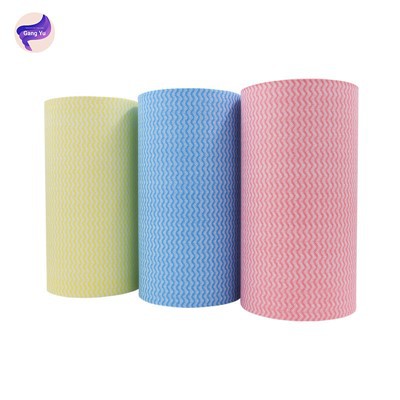
If you’re interested in learning more about our flushable nonwoven fabric and its UV – resistance properties, or if you’re ready to start a procurement discussion, don’t hesitate to reach out. We’re here to provide you with top – quality products and excellent customer service.
Disposable Face Mask References:
- ASTM International standards on UV testing of nonwoven materials
- Research papers on polymer additives for UV stabilization
- Industry reports on the performance of flushable nonwoven fabrics
Hangzhou Gang Yu Health Products Co., Ltd.
Hangzhou Gang Yu Health Products Co., Ltd. is well-known as one of the leading flushable nonwoven fabric manufacturers or suppliers in China, also supports customized service. Please feel free to wholesale cheap flushable nonwoven fabric made in China here and get quotation from our factory. Quality products and low price are available.
Address: No.1 Yumin Road, Dangwan Town,311221, Xiaoshan District, Hangzhou City, Zhejiang Province, China (Mainland)
E-mail: sales@gynonwovens.com
WebSite: https://www.gynonwovens.com/
