If you’ve ever spent hours scrolling through furniture sites, staring at coffee tables that look cool but feel totally impractical, you know the struggle. I’m the owner of a small furniture supply company that specializes in coffee tables—we work with cafes, boutique hotels, and even regular homeowners, and I’ve seen every good and bad coffee table out there. Trust me, there’s way more to a quality coffee table than just “it fits in the living room.” Let’s break down what actually makes one worth buying, no fancy marketing buzzwords required. Coffee Tables

First off, let’s talk about build quality, and I don’t just mean “does it not wobble when you set a mug down.” I’m talking about materials that can stand the test of time, because a coffee table gets more use than almost any other piece of furniture in a room. You’re setting hot mugs on it, dropping remote controls, spilling wine (we’ve all been there), and even resting your feet on it after a long day. So forget particleboard— that stuff swells if you spill a glass of water and starts cracking within a year. We use solid hardwoods like oak, maple, or walnut for most of our tables, but we also work with high-quality mango wood, which is durable and has that gorgeous, unique grain that makes each table one-of-a-kind. If someone wants a more modern look, we do solid concrete tabletops too, but only the kind that’s been sealed with a food-safe, scratch-resistant coating—no chipping, no staining, and it doesn’t retain heat like regular concrete. The frame is just as important; we always use joinery, not cheap nails or staples. A table that’s glued and doweled or screwed together will last decades, while one that’s held together with nails will start separating within a couple of years. I’ve had customers come back to us with tables their parents bought 30 years ago that are still going strong, and that’s the kind of quality we’re all about.
Next, size and scale. This is where so many people go wrong. They see a big, beautiful coffee table in a showroom and buy it, only to realize it blocks the walkway between the couch and the TV. A good coffee table shouldn’t cram the living room—there should be about 18 inches of space between the table and the front of the couch, enough to get in and out comfortably. If the room’s small, don’t force a big rectangular table; a round or oval one works way better because there are no sharp corners to bang your knee on, and it takes up less visual space. For larger rooms, maybe you can go with a pair of small side tables instead of one big table, but if you want a single piece, make sure it’s not so long that it stretches all the way across the couch. Pro tip: measure your couch, your room, and even the height of your couch cushions before you buy. The ideal coffee table height is about 1 to 2 inches shorter than the top of your couch cushions. If it’s too tall, you’ll feel like you’re hunching over when you set a mug down; too short, and you’ll be reaching way down, which is annoying. I’ve had customers come to me with a 12-inch tall table that looked great but was impossible to use—we swapped it for a 16-inch one, and suddenly their living room felt way more functional.
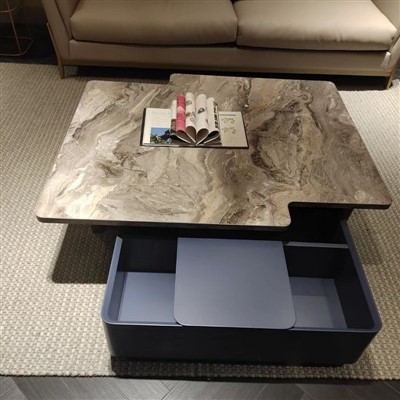
Then there’s functionality, because a coffee table shouldn’t just be a pretty surface to dust. Think about how you actually use your space. Do you have kids or pets that leave toys all over? A table with hidden storage—like drawers, lift-top surfaces, or shelves underneath—is a game changer. We make a lot of tables with lift-top tops that flip up to create a workspace for laptops, so people can work from the couch without needing a separate desk. That’s perfect for small apartments where space is tight. Do you love hosting game nights or board games with the family? A table that’s big enough to fit a full game board is essential—our 48-inch square tables are super popular for that. If you’re a book lover, open shelving underneath lets you stack your favorite novels or magazines, so you don’t have to clutter up your couch. And let’s not forget about moveability. If you like rearranging your living room every few months, a table that’s not too heavy is a good call. We add small casters to some of our tables—they lock in place when you need them stable, and roll easily when you want to shift things around. No more heaving a 100-pound table across the room and scraping your hardwood floors.
Design-wise, a good coffee table should match your space, not fight against it. But that doesn’t mean it has to be boring. There’s a balance between style and practicality. A lot of people fall for super trendy tables that look great for six months and then feel outdated. We prioritize timeless designs that work with farmhouse, modern, mid-century, and even eclectic styles. Like a solid walnut rectangular table with tapered legs— that’s mid-century, but it also works in a more traditional room if you style it right. If you want something more unique, a table with a live edge (the natural curved edge of the wood) adds character without being over the top. The key is choosing a design that fits your existing furniture, not one that’s so bold it clashes. For example, if your couch is a bright, patterned fabric, don’t pair it with a super busy tabletop—go for something simple, like a solid marble top. If your space is all neutral, you can add a table with a fun leg design or a wood that has more color variation, like cherry.
Wait, and let’s talk about durability against the little stuff—spills, scratches, dents. I mentioned materials earlier, but there’s also how the table is finished. We always use food-safe finishes, because you’re going to set food and drinks on it, and you don’t want harsh chemicals leaching into your food. For wood tables, we use a polycrylic finish that’s scratch-resistant and easy to wipe clean—spill a soda? Just wipe it up with a cloth, no stains. For concrete tables, we use a industrial-grade sealer that makes it waterproof, so even if you leave a full glass of water on it overnight, no ring will form. We also test every table for weight capacity—our tables can hold up to 200 pounds on the top, so you can stack books, a lamp, and even a large tray of appetizers without worrying about it bending or breaking. I’ve seen so many cheap tables that sag under the weight of a few heavy books, and that’s a total waste of money.
Another thing people overlook: aesthetics from all sides. A lot of coffee tables are designed to be seen only from the front, but if you’re sitting on the couch, you’re looking at all sides of it. A quality table should look good no matter where you stand. No rough edges, no uneven legs, no gaps between the tabletop and the frame. We make sure every table is sanded smooth, with rounded edges (unless it’s a square table that’s designed for a more modern look) so you don’t get those little splinters. And the legs—they should be perfectly even. I always check each table by setting a level on the top; if it’s off by even a quarter inch, we fix it before it leaves our warehouse. No one wants a table that rocks back and forth when you put your coffee down.
Let’s also mention accessibility, especially if you have mobility issues. A coffee table that’s too low or has a base that’s in the way can make it hard to get to items on the table. We make some of our tables with open bases, so there’s no legs blocking the space between the couch and the table, making it easier to reach things. And for people in wheelchairs, tables that are 28 to 30 inches tall are perfect because they align with standard wheelchair heights. It’s the little details like that that make a coffee table actually work for everyone, not just able-bodied people in traditional seating.
Now, I know some people might think “a coffee table is just a coffee table,” but after being in this industry for years, I can tell you that the good ones stick around. They don’t need to be replaced every few years, they fit your space perfectly, and they actually make your daily life easier. Too many suppliers cut corners on materials or size to make a quick sale, but we care about building tables that our customers will love for decades. If you’re in the market for a new coffee table—whether it’s for your home, a business, or any other space—don’t just go for the cheapest option or the one that looks the best in photos. Think about how you use your space, the size of your room, and the durability of the materials. And if you’re not sure what’s right for you, reach out. We can help you pick the perfect table that checks all the boxes—style, function, quality.
If you’re ready to chat about custom orders, bulk purchases for businesses, or just want more info on our styles, feel free to get in touch. We work with all kinds of clients, from homeowners looking for a single table to larger businesses needing full sets for multiple locations. Our goal is to make sure you end up with a coffee table that you’ll actually enjoy using every day, not just a piece of furniture that collects dust.
Lower Cabinets References:
- Furniture Design Institute. (2022). “Functional Furniture for Modern Living Spaces.” Interior Design Quarterly.
- National Home Furnishings Association. (2023). “Durability Standards for Residential Furniture.” Home Goods Safety Report.
- Wood and Wood Products Council. (2021). “Hardwood Selection for High-Traffic Furniture.” Wood Industry Journal.
- American Society of Interior Designers. (2022). “Scale and Proportion in Room Layout.” Interior Design Practice Guidelines.
- International Code Council. (2022). “Accessibility Requirements for Residential Furniture.” Building Code Updates.
Zhejiang Runcell Science and Innovation Furniture Manufacturing Co., Ltd.
We’re known as one of the most reliable coffee tables manufacturers and suppliers in China. We warmly welcome you to buy customized coffee tables made in China here from our factory. If you have any enquiry about quotation, please feel free to email us.
Address: Nanxun District, Huzhou City, Zhejiang Province
E-mail: Runcellwm@163.com
WebSite: https://www.cnruncell.com/
