If you’ve ever worked in industries that rely on EtO gas—think medical device sterilization, pharmaceutical manufacturing, or even certain agricultural fumigation—one question pops up repeatedly, especially when handling, storing, or transporting the material: Is EtO gas flammable? As a supplier of EtO gas, I get this question multiple times a week, from plant managers who need to update safety protocols to new team members who are still learning the ropes. It’s not a trivial question, either: understanding EtO’s flammability properties isn’t just a box to check on a safety checklist—it’s the foundation for keeping workplaces safe, complying with regulatory standards, and using the material effectively. Let’s break this down, from the basic science to what this means for anyone working with or purchasing EtO gas. EtO Gas
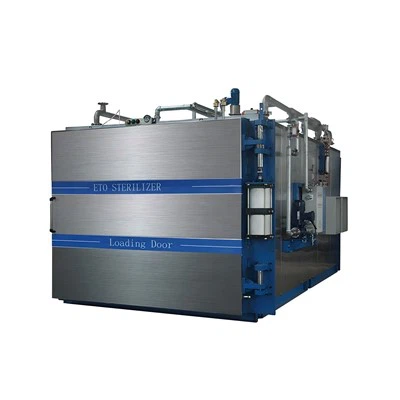
First, let’s get clear on what EtO gas is, because its chemical makeup is directly tied to its flammability. EtO, short for ethylene oxide, is a colorless, flammable gas at room temperature with a slightly sweet, ether-like odor. Chemically, it’s a small, highly reactive organic compound with a three-member ring structure—two carbon atoms and one oxygen atom connected in a triangle. That tight ring makes it incredibly reactive, which is why it’s so useful for sterilization: it can penetrate plastic packaging, kill bacteria, viruses, and spores without damaging heat-sensitive materials like syringes or surgical tools. But that same reactivity is also what makes its flammability a critical consideration.
Now, to answer the core question: yes, EtO gas is flammable—extremely so, in many conditions. But flammability isn’t a yes/no trait; it’s defined by specific parameters: flash point, flammable limits (the range of gas concentrations in air that can ignite), and autoignition temperature. Let’s go through each to add context that matters for our customers.
The flash point is the lowest temperature at which a substance can vaporize to form an ignitable mixture in air. For EtO, the flash point is -20 degrees Celsius (-4 degrees Fahrenheit). That means at temperatures just slightly above freezing, EtO can release enough vapor to create a mix that can catch fire. Compare that to, say, gasoline, which has a flash point of -45 degrees Celsius (-49 degrees Fahrenheit)—a bit lower, but EtO’s flammable limits are far wider, which is a bigger risk. Flammable limits (also called explosive limits) are the minimum and maximum percentage of EtO in air that will burn if an ignition source is present. For EtO, those limits are 3% to 100% by volume. Wait, 100%? That’s not a typo. Most flammable gases have upper flammable limits (UFL) well below 100%—propane, for example, has an UFL of about 9.5%. The fact that EtO’s upper limit is effectively 100% means that even pure EtO gas (no air mixed in) is capable of igniting. That’s a huge difference, and it’s why EtO is classified as an extremely flammable gas by regulatory bodies like OSHA and the International Air Transport Association (IATA).
Then there’s autoignition temperature, which is the minimum temperature a substance needs to reach to ignite without an external flame or spark. For EtO, that’s just 429 degrees Celsius (804 degrees Fahrenheit). To put that in perspective, a common spark plug in a car operates at around 3,000 degrees Fahrenheit—so even relatively low-heat sources, like a hot surface on industrial equipment, a static spark from poorly grounded metal, or even a lit cigarette (which burns at around 900 degrees Celsius) can easily trigger ignition. This isn’t hypothetical, either: I’ve been in the industry for 12 years, and I’ve worked with three different facilities that experienced small EtO fires over the years, all traced back to ungrounded equipment or hot surfaces in areas where EtO was being stored or used.
But here’s the part that’s often confusing for new customers: EtO’s flammability is highly dependent on concentration and environment. For example, if EtO is diluted with an inert gas like nitrogen or carbon dioxide, its flammable limits shrink drastically. OSHA notes that when EtO is mixed with more than 50% nitrogen, the lower flammable limit jumps to 10%, and the upper limit drops to 80%—still flammable, but a narrower range. That’s why many of our customers use inert gas blanketing in storage tanks: it displaces air, so there’s less oxygen to mix with EtO, reducing the risk of a combustible mixture. That said, inert gas isn’t a foolproof solution. If the blanketing fails and air seeps in, EtO can quickly reach those 3% to 100% concentrations again.
Another key point: EtO is also explosive under pressure. When EtO is stored in pressurized cylinders or tanks, a fire can cause the container to rupture violently, releasing EtO gas and creating a secondary explosion. That’s why all EtO storage vessels we supply are built to strict pressure standards, and we require our customers to follow specific storage protocols, like keeping cylinders in well-ventilated, cool areas away from heat sources and ignition points.
I know what some of you are thinking: If EtO is this flammable, why is it so widely used? The answer is that flammability risk can be managed with proper training, equipment, and protocols. EtO’s benefits far outweigh the risks when handled correctly, and as a supplier, it’s our job not just to deliver EtO gas, but to make sure our customers have the knowledge to use it safely.
Let’s talk about what this means for you, whether you’re a hospital’s sterile processing department, a pharmaceutical manufacturer, or a third-party sterilization service. First, never work with EtO without proper personal protective equipment (PPE): that includes flame-resistant clothing, safety goggles, and respiratory protection to avoid exposure to EtO vapors, which are also toxic. Second, regular air monitoring is non-negotiable. Most modern sterilization facilities use continuous gas detectors that alert workers if EtO levels reach even 10% of the lower flammable limit (3% is the LFL, so 0.3% concentration) or the OSHA exposure limit of 1 part per million (ppm) over an 8-hour workday. Third, all equipment that comes into contact with EtO must be grounded to prevent static sparks. Even a tiny static discharge from a worker’s sleeve or a metal pipe can ignite an EtO-air mixture if concentrations are within the flammable range.
I also need to address a common misconception: some companies think that because their EtO is stored in cylinders, it’s safe to leave them near other equipment. That’s not true. EtO cylinders must be stored at least 10 feet away from any heat source, ignition source, or combustible material. If you’re transporting EtO, IATA regulations classify it as a dangerous good, so you need specific packaging, labeling, and training for anyone moving it by truck, train, or air.
As a supplier, we take flammability seriously at every step. When we process and package EtO gas, we follow OSHA, EPA, and IATA standards to ensure that our cylinders are properly pressurized, leak-tested, and labeled with clear hazard warnings. We also provide every new customer with a detailed safety data sheet (SDS) that outlines flammability properties, emergency procedures, and best practices for handling, storage, and transport. For larger customers, we offer on-site safety training sessions, led by our in-house industrial hygiene experts, to walk through their specific facilities and address any unique risks.
Recently, we worked with a mid-sized medical device company that had been using a different EtO supplier and had a near-miss when a storage cylinder developed a small leak. The plant manager told us they had no idea EtO’s flammable limits were so wide, and they didn’t have a continuous gas detector in their storage area. We helped them upgrade their monitoring system, retrain their staff, and adjust their storage layout to keep cylinders farther from their heat-generating compressors. That near-miss turned into a chance to make their workplace safer, and that’s why we do what we do: it’s not just about selling EtO gas—it’s about being a partner that cares about their safety as much as they do.
I know that when you’re managing a production schedule, keeping equipment running, and meeting regulatory deadlines, safety protocols can feel like an extra layer of work. But the reality is that understanding EtO’s flammability properties isn’t just a safety step—it’s a way to avoid costly downtime, regulatory fines, and, most importantly, injuries. A single EtO fire can shut down a facility for weeks, damage expensive equipment, and put workers at risk. Investing in proper safety measures and working with a reliable supplier who prioritizes safety will save you far more in the long run.

If you’re looking to source EtO gas, or if you have questions about your current handling and storage protocols, we’re here to help. Whether you’re a small clinic needing a few cylinders a month or a large pharmaceutical plant with bulk storage needs, we can provide the right type of EtO, along with the support, training, and resources you need to use it safely and effectively. Don’t wait to address safety questions—reach out to start a conversation about your EtO gas needs, and let’s work together to keep your workplace safe and your operations running smoothly.
Industrial EO Sterilizer References
- Occupational Safety and Health Administration (OSHA). Ethylene Oxide Safety and Health Guidelines.
- International Air Transport Association (IATA). Dangerous Goods Regulations: Ethylene Oxide.
- U.S. Environmental Protection Agency (EPA). Ethylene Oxide: Chemical Background and Safety Standards.
- National Fire Protection Association (NFPA). NFPA 704: Standard System for the Identification of the Hazards of Materials for Emergency Response.
Hangzhou Riches Engineering Co., Ltd.
Hangzhou Riches Engineering Co., Ltd. is one of the most professional eto gas manufacturers and suppliers in China, specialized in providing high quality custom service and ODM service. We warmly welcome you to buy high-grade eto gas for sale here from our factory.
Address: No. 368, Wenjiao Road, Fuyang District, Hangzhou
E-mail: jason@riches-company.com
WebSite: https://www.eto-sterile.com/
