If you’ve ever sat down to set up a home network for a new smart TV, or stood next to a data server rack where dozens of optical transceivers blink tiny red and green lights like a constellation, you’ve probably never stopped to wonder: what makes those little glass-and-metal modules so reliable that the entire digital world hums around them? Last month, I sat across from a network engineer at a mid-sized e-commerce company who told me he’d replaced three wrong transceivers in a week because his team didn’t understand bit error rate (or BER, as we call it in this industry). That conversation stuck with me, because it’s exactly why our team spends so much time talking about BER—we’re an optical transceivers supplier, and BER isn’t just a technical number for us; it’s the backbone of every connection we build for customers. Let’s break this down, not with textbook jargon, but with the real-world context of what we do every day. Optical Transceivers
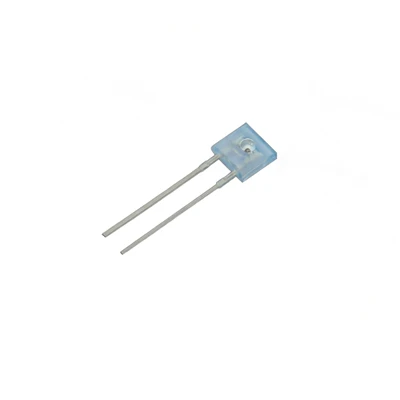
First, let’s get one thing straight: optical transceivers work by turning electrical data into light signals that zip through fiber optic cables at the speed of light. The data is split into tiny units called bits—1s and 0s—like Morse code, but far faster. A bit error is when a 1 gets turned into a 0, or a 0 into a 1, during that light’s journey down the cable, and BER is just the measure of how often that happens. For example, a BER of 10^-12 means one error happens for every trillion bits transmitted. That might sound small, but in a data center moving 100 gigabits per second (Gbps) of data, that’s 100 billion bits flying by every second. If you do the math, a 10^-12 BER works out to about one error every 10 seconds. For most applications, that’s completely acceptable—you won’t even notice it when you stream a show or load a webpage. But if you’re handling bank transactions or running a real-time video call for a hospital’s telehealth team, one error every 10 seconds is a problem.
Let’s talk about what causes those bit errors, because that’s where our customers usually struggle. The most common culprit is signal attenuation—meaning the light signal gets weaker as it travels through the fiber cable, like a voice fading in a long hallway. Even a small bend in a fiber or a dirty connector can sap enough light that the receiver can’t tell a 1 from a 0. Then there’s dispersion: light doesn’t travel through fiber as a single, sharp pulse; it spreads out a little over distance, so pulses run into each other and blur. We also have to consider noise from the transceiver itself—every component, from the laser that generates the light to the photodiode that reads it, creates a tiny amount of electrical or optical noise that can flip a bit. For a long time, this was the limiting factor for optical transceivers, but modern design tweaks—like using better lasers and signal processing chips—have cut these errors down drastically in the last decade.
Here’s the part where I want to share something real from our work as an optical transceivers supplier. We don’t just test our transceivers in a lab with perfect, controlled conditions (though we do plenty of that); we also put them through real-world stress tests that mirror what our customers actually face. Last quarter, a customer came to us with a problem: their existing transceivers would drop below their required BER when run at full load for 72 hours straight, even though the lab numbers said they should be fine. When our engineering team tested our equivalent transceivers under the same conditions, we found that our transceivers maintained a consistent 10^-15 BER—one error per quadrillion bits, which is almost unnoticeable. Why the difference? Our R&D team had spent six months optimizing the thermal management in our transceivers, because we found that even a 5-degree temperature shift could throw off the laser’s light output, leading to more errors over time. That’s the kind of detail that doesn’t show up in datasheets, but that matters when a customer’s entire business depends on their network.
Now, it’s important to clarify that not all BER requirements are the same. The right BER for your use case depends entirely on what you’re using the network for. Let’s break down common applications: for consumer use—like home Wi-Fi, streaming, or basic web browsing—a BER of 10^-9 (one error per billion bits) is often enough, because network protocols like Ethernet include built-in error correction (that’s the little reloading you might see when a page glitches, or the way a video pauses for half a second). For data centers handling cloud storage and general server traffic, most standards require a BER of 10^-12, which is where we set the base performance for our mid-range transceivers. But for high-stakes applications: 5G core networks, financial transaction processing, or high-frequency trading, the required BER is much stricter—often 10^-15 or even lower, because any error can cost thousands of dollars per minute. That’s why our high-end transceivers, designed specifically for these use cases, go through extra testing to maintain that ultra-low BER even in extreme environments, like cold server rooms or dusty outdoor network cabinets.
A common mistake we see customers make is confusing “good BER” with “perfect connection.” They’ll think if their connection is working, their BER is flawless—but that’s not how it works. BER is a continuous measurement, not a pass/fail check. For example, a transceivers might have a BER of 10^-12 under low load, but jump to 10^-10 when run at 100% capacity, which would be a problem for a data center during peak hours. That’s why we always work with customers to test our transceivers in their own environment before they make a bulk purchase. A few months ago, a customer in the renewable energy space tested our 400G transceivers in their remote wind farm network, where temperatures swing between -20°F and 120°F. Their lab tests showed another brand’s transceivers hitting a BER of 10^-10 at 110°F, but ours stayed at 10^-15 across the entire temperature range. That’s the kind of tailored testing we do that makes us more than just a supplier—we’re a partner, not just someone who ships a box.
Now, let’s talk about how we measure BER, because it’s not as simple as hitting a button on a transceiver. To get an accurate reading, you need a bit error rate tester (BERT), a device that generates a known pattern of bits, sends it through the transceiver and cable, and counts how many bits are flipped when they come out the other end. But even with a BERT, there are nuances. For short distances—like between servers in a data center rack, where fiber is only a few meters long—BER is easy to measure, because the signal is strong and there’s almost no dispersion. For long-haul networks, where fiber can run hundreds of kilometers, you have to account for things like optical amplifiers that boost the signal along the way, which can also add noise. Our team has been refining our BERT testing for long-haul transceivers for years; we recently updated our test setup to include real-world fiber attenuation values, instead of using the perfect standard values that manufacturers often rely on. The result? Our long-haul transceivers deliver a BER that’s consistent with real network conditions, not just lab numbers.
I should also address a myth we hear all the time: that higher-speed transceivers (like 800G or 1.6T) have worse BER than lower-speed ones. It’s true that higher speeds mean shorter pulses of light, which are more susceptible to blurring from dispersion or noise. But with modern technology—like advanced modulation formats (we use PAM4 in most of our high-speed transceivers, which encodes two bits per pulse) and digital signal processing (DSP) that corrects for blur and noise—high-speed transceivers can actually match or even exceed the BER of older lower-speed models. For example, our 800G transceivers maintain a BER of 10^-12 at 10km reach, which is the same as our 100G transceivers did a decade ago. That’s been one of the most exciting parts of our work lately—watching our R&D team overcome speed limits while keeping BER rock solid.
Let’s circle back to that engineer I mentioned earlier, because that conversation led us to create a free BER testing guide for our customers. He told me his team had bought cheap transceivers from an overseas supplier that had a datasheet claiming a 10^-12 BER, but when they tested them, they were hitting 10^-8 during peak hours, causing slowdowns and even data loss. The problem? Those datasheet numbers were measured under perfect lab conditions with new, unused fiber and constant room temperature, not in a real data center with hot servers and old cables. That’s why our guide walks customers through how to test BER in their own environment, what numbers to look for, and how to adjust their network setup (like cleaning connectors or adding signal boosters) if their BER is too high. It’s a free resource we put out because we know that understanding BER is the first step to building a reliable network, and we want our customers to have the information they need, not just our products.
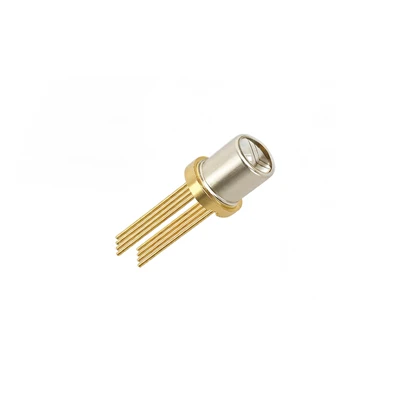
At the end of the day, BER isn’t just a technical specification—it’s a promise. When we ship an optical transceiver to a customer, we’re not just sending a piece of hardware; we’re sending a guarantee that their data will get where it needs to go, accurately and on time. Whether you’re a small business setting up a new office network, a data center operator managing thousands of servers, or a telecom company building out a 5G network, the BER of your transceivers determines how reliable your entire operation is. If you’ve ever dealt with network downtime caused by bad connections, or you’re shopping for new transceivers and want to make sure you’re getting the right BER for your needs, our team is here to help. We don’t just sell transceivers—we partner with customers to design a solution that fits their exact requirements, whether that’s a low-BER model for high-stakes applications or a cost-effective option for everyday use. Don’t hesitate to reach out to our team to discuss your project and find the right optical transceiver for your network needs.
Optoelectronic Devices References
- Agrawal, G. P. (2021). Fiber-Optic Communication Systems (5th ed.). John Wiley & Sons.
- Keiser, G. (2018). Optical Fiber Communications (5th ed.). McGraw-Hill Education.
- International Telecommunication Union. (2020). Series G: Transmission Systems and Media, Digital Systems and Networks. Recommendation G.959.1: Optical interfaces for transport networks.
- Casares-Giner, V., & Martinez, L. (2019). Bit error rate analysis in high-speed optical transceivers. Journal of Lightwave Technology, 37(16), 4127-4135.
Zhejiang Chengmei Technology Co., Ltd.
As one of the most professional optical transceivers manufacturers and suppliers in China, we’re featured by quality products and good price. Please rest assured to wholesale bulk premium optical transceivers made in China here from our factory. Also, quotation is available.
Address: No. 383, Jinhe Road, Qinshan Street Industrial Park, Haiyan County, Jiaxing City, Zhejiang Province
E-mail: shiwei@cm-semi.com
WebSite: https://www.cmfiber.com/
