If you’ve ever stood in front of a commercial building, a multi-unit apartment complex, or even a small office with half a dozen doors, each needing to be accessed by a different set of people—front desk staff, maintenance, unit owners, cleaners—you’ve probably wondered how someone can unlock every door with one key without every key working on every lock. That’s master keying, and as a door lock cylinder supplier who’s spent the last 12 years troubleshooting, installing, and refining these systems for small businesses and large property managers alike, I can tell you it’s equal parts clever mechanical engineering and intentional design, not some “hacked lock” trick. Door Lock Cylinder
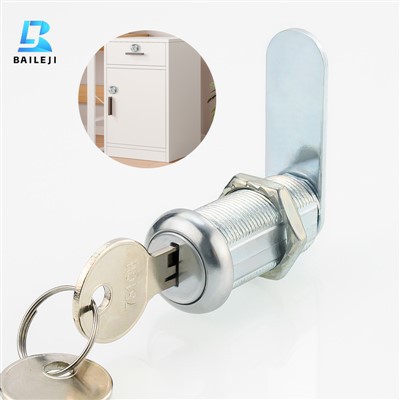
Let’s break this down, starting with the basics you already know: how a standard pin tumbler lock works. Every basic pin tumbler cylinder has a keyway shaped to accept only the right key, then inside, metal pins of different lengths stacked above the key pins. When you insert a properly cut key, the notches on the key align all the pin tops exactly at the shear line—the thin gap between the cylinder’s housing and the rotating core. When you turn the key, the core spins, the bolt or latch retracts, and the door opens. No wrong key lines all pins up, so the core stays stuck, and you can’t open it.
Master keying is just a modified version of this same pin system, designed to let two or more keys work on the same cylinder, or for a single key to work on multiple cylinders. There are two common systems we use here at the shop, and both depend on tiny, precise pin adjustments. The first is the common “pin master key” system, which is what most small to mid-sized properties use, and it’s the most straightforward to explain.
Let’s say we’re working on a 10-unit apartment building. Normally, each unit gets a unique key that only works on its own cylinder. For master keying, we adjust each cylinder’s pin stack so two sets of notches exist in the key pins. One set is cut to match the unit’s unique key (we call this the “change key”), and the other is a uniform notch that lines up with a master key.
Wait, let’s get specific on how that alignment works, because this is where people get confused. The shear line isn’t a single fixed line for all cylinders. For each unique cylinder, we set the bottom of the master key’s notch at a slightly different height, relative to the change key’s notch. For Unit 1’s cylinder, for example, the top pin’s notch is set 10mm from the bottom of the pin stack to line up with the master key, while the Unit 1 change key’s notch is set 8mm. For Unit 2, that master key notch is set 11mm, so the same master key will line up the pins in Unit 2’s cylinder at the shear line, even though its unique 9mm notch only works for the Unit 2 change key.
That’s why a master key will open every cylinder in that apartment building, but a unit’s change key only works on its own door. We also add a “grand master key” layer for larger properties, like when a whole office building has multiple wings. Each wing gets its own master key, and then a central grand master key aligns with all the wing master notches, acting as a universal key for property managers.
The second system, less common for residential complexes but perfect for small businesses, is the “six pin master key” setup. Standard cylinders have 5 pins, but we can swap in a sixth pin that acts as a dedicated master pin, separate from the five that control the unique key. This is more secure, because the extra pin makes it harder for someone to pick or decode the lock to bypass the master key system. For small retail spaces where the manager needs to open the back stock room, office, and front door, while each employee only gets one key matching their assigned door, this works really well—no extra fumbling with multiple keys for the manager, no risk of staff being able to access areas they shouldn’t.
Now, I know what some of you are thinking: “Is master keying secure? Can someone just use a master key on my personal door lock?” Let’s get that out of the way. A properly installed master key system isn’t a loophole for thieves. It only works on cylinders that were intentionally configured at the factory or by a certified locksmith with the right code set. If you have a standard single-cylinder deadbolt on your home, it’s not part of a master key system—unless you specifically had one installed for a rental property, and only the people who know the master key code can get a duplicate. The keyway shape also makes a big difference: high-security keyways (like ones with asymmetric cuts or restricted blank keys) can only be duplicated by authorized vendors, so even if someone tries to copy a master key, they won’t get the exact cuts needed to line up all the pins.
I’ll admit, I’ve seen bad master key systems over the years, too—ones that were installed by someone who skipped precise pin alignment, so duplicate change keys worked on multiple doors, or a master key could open a lock it wasn’t supposed to. That’s why, as a lock cylinder supplier, we don’t just cut pins and send them out. We work directly with property managers and contractors to map out exactly how many key levels they need, how many cylinders they have, and what access each group needs. For example, a small café with a front door, back office, storage, and a cash office might need four key levels: staff key for front/back doors, manager key for storage, general manager key for cash office, and a grand master for the owner. We provide labeled pin sets and key codes so they can order new duplicates without messing up the alignment, which saves them from the hassle of having to rekey every door if a key is lost.
Another common question: can you master key any cylinder? The short answer is no. Older, cheap pin tumbler locks—like those thin, single-pin locks you might find on a cheap interior closet door—usually don’t have enough pin space to accommodate the extra notches needed for a master key system. Trying to force master key cuts on those will just make the lock jam, and often ruin it entirely. We always recommend using mid-to-high quality cylinders for master key projects, because their thicker housing and precision pins can hold multiple notches without wearing down fast. We’ve seen people try to use $5 big-box store locks for a 15-unit apartment complex, and within two years, half the locks were jamming because the cheap pins couldn’t handle the repeated use of two different key sets. It’s a waste of money in the long run, so we always advise our clients to invest in cylinders rated for commercial use if they’re going to use master keying.
Let me walk through a real example of a project we did last year to make this concrete. A local property management company had a 12-unit building where the previous lock system was a mess: every tenant had the same key, so units kept getting broken into when people lost their keys, and the property manager had to rekey the entire building three times in two years. They came to us wanting a master key system where each tenant had a unique key, the property manager had a master key, and they didn’t have to rekey everything every time a tenant moved out.
First, we pulled all the old cylinders out and swapped them for our commercial-grade 5-pin cylinders, which have extra pin space. We gave each cylinder a unique pin code for the tenant’s change key, then we cut a master key that had a consistent notch across every cylinder. We also added a small stamp to the bottom of each cylinder and its corresponding key so both the manager and tenants could tell them apart at a glance—no fumbling with keys that look identical. Six months later, the manager came back to us saying it had cut their rekey costs by 70% when tenants moved out, since they only had to rekey the individual unit, not the whole building. That’s the kind of solution we love delivering, not just selling cylinders.
If you’re a property manager, building owner, or contractor reading this and realizing your current lock system isn’t working for your access needs, master keying is probably the solution you need. It’s not a gimmick, it’s a mechanical system built on the same reliable pin tumbler technology that’s been around for over a century, refined to fit modern needs for secure, layered access. It’s secure when done right, cost-effective in the long run, and way less of a hassle than juggling a dozen different keys.
If you’re looking to upgrade your lock system, rekey existing cylinders with master keying, or just have questions about what works for your specific space, reach out to connect. We’ve worked on everything from 5-unit apartment complexes to 50,000-square-foot office buildings, and we can help you design a system that fits your access needs without compromising security.
Cabinet Lock References:
- "Locksmithing Principles and Practices." Associated Locksmiths of America, 2019.
- "Pin Tumbler Lock Design and Master Keying Systems." Journal of Security Technology, Vol. 14, No. 2, 2021, pp. 45-62.
- Residential and Commercial Lock Installation Guidelines. National Fire Protection Association, 2020.
Suzhou Baileji Intelligent Lock Industry Co., Ltd.
As one of the most professional door lock cylinder enterprises in China, we’re featured by quality products and good price. Please rest assured to buy discount door lock cylinder in stock here and get pricelist from our factory. Also, customized service is available.
Address: 3rd Floor, Building 9, Shengteng Industrial Park, No. 8 Ruyuan Road suzhou, jiangsu, China
E-mail: vip@bailejilocks.com
WebSite: https://www.bailejilock.com/
