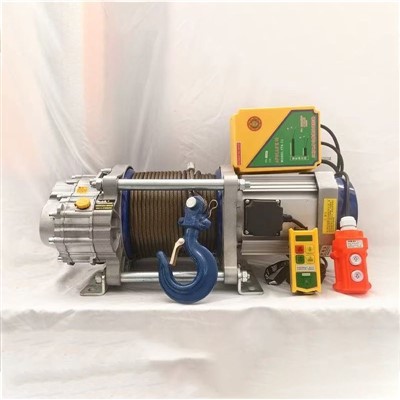
As a supplier of industrial electric hoists, I’ve witnessed firsthand the importance of every component within these powerful machines. One critical part that often doesn’t get the attention it deserves is the gearbox. Let’s delve into what the backlash of an industrial electric hoist’s gearbox is, why it matters, and what effects it can have on the overall performance of the hoist. Industrial Electric Hoist
Understanding Gearbox Backlash
Backlash in a gearbox refers to the clearance or play between mating gear teeth. In other words, it’s the amount of angular movement between the input and output shafts of a gear set when the direction of rotation changes, without any corresponding movement in the load. This clearance is necessary in gear manufacturing to prevent binding due to variations in manufacturing tolerances, thermal expansion, and lubrication requirements.
In the context of an industrial electric hoist, the gearbox is responsible for transmitting power from the motor to the hoist drum, which in turn lifts and lowers the load. Backlash can occur at various gear meshes within the gearbox, and its magnitude is influenced by factors such as gear design, manufacturing precision, and wear over time.
Causes of Backlash in Industrial Electric Hoist Gearboxes
- Manufacturing Tolerances: During the manufacturing process, it’s impossible to create gears with perfect dimensions. Small variations in tooth thickness, pitch, and profile can lead to some degree of backlash. These tolerances are necessary to ensure that gears can be produced efficiently and cost – effectively.
- Wear and Tear: Over time, continuous use of the industrial electric hoist causes the gear teeth to wear. As the teeth wear, the clearance between them increases, resulting in higher backlash. This is particularly true in high – load applications where the gears are subjected to significant stress and friction.
- Lubrication Issues: Inadequate lubrication can accelerate wear on the gear teeth. Without proper lubrication, frictional forces increase, leading to more rapid material removal from the gear surfaces. This can cause the backlash to increase over a relatively short period.
- Misalignment: If the gears are not properly aligned within the gearbox, it can cause uneven loading on the teeth. This can lead to premature wear on one side of the teeth and an increase in backlash. Misalignment can occur due to improper installation, vibration during operation, or damage to the gearbox housing.
The Backlash Effects on Industrial Electric Hoist Performance
- Precision and Accuracy: In applications where precise positioning of the load is required, such as in manufacturing processes or in the installation of delicate equipment, backlash can be a significant problem. When the direction of the hoist’s movement changes, the backlash in the gearbox can cause a delay in the actual movement of the load. This makes it difficult to achieve accurate positioning, which can lead to errors in the manufacturing process or damage to the equipment being installed.
- Load Stability: Backlash can also affect the stability of the load being lifted. When the hoist starts or stops, the sudden movement due to backlash can cause the load to jerk. This can be dangerous, especially when dealing with heavy or fragile loads. The jerking motion can increase the stress on the hoist’s components, potentially leading to premature failure.
- Increased Wear and Maintenance: Higher backlash means that the gears are not meshing as smoothly as they should. This results in increased impact forces between the teeth during each change in direction. Over time, these impact forces can cause additional wear on the gears, bearings, and other components of the gearbox. As a result, more frequent maintenance and replacement of parts are required, which can increase the overall operating costs of the industrial electric hoist.
- Noise and Vibration: Backlash can cause excessive noise and vibration during the operation of the hoist. The impact between the gear teeth due to the play creates a rattling or knocking sound, and the uneven movement can lead to vibrations. These noise and vibration levels not only create an unpleasant working environment but can also be an indication of potential problems within the gearbox. Excessive vibration can also loosen connections and cause damage to other parts of the hoist.
Detecting and Measuring Backlash
There are several methods for detecting and measuring the backlash in an industrial electric hoist’s gearbox. One common method is to use a dial indicator. The dial indicator is attached to the output shaft of the gearbox, and the input shaft is rotated in both directions. The difference in the readings on the dial indicator when the direction of rotation changes gives an indication of the backlash.
Another method is using a torque wrench. By applying a known torque to the input shaft and measuring the amount of angular displacement of the output shaft, the backlash can be calculated. This method is particularly useful for more complex gearbox arrangements where direct measurement with a dial indicator may be difficult.
Controlling and Minimizing Backlash
- Proper Selection of Gears: When designing or selecting an industrial electric hoist, choosing gears with appropriate backlash characteristics is crucial. For applications that require high precision, gears with lower backlash should be used. However, it’s important to note that gears with very low backlash can be more expensive and may require more precise manufacturing and installation.
- Regular Maintenance: Regular maintenance is key to minimizing backlash. This includes timely lubrication, inspection of gear teeth for wear, and alignment checks. By replacing worn gears and bearings in a timely manner, the increase in backlash can be controlled.
- Adjustment Mechanisms: Some gearbox designs incorporate adjustment mechanisms that allow for the reduction of backlash. These mechanisms can be used to compensate for wear over time and ensure that the backlash remains within an acceptable range.
The Importance of Backlash Management for Our Customers
As a supplier of industrial electric hoists, we understand that the performance and reliability of our products are of utmost importance to our customers. Managing the backlash in the gearbox is a critical aspect of ensuring that our hoists meet the highest standards of quality and safety.
By providing high – quality gears with low initial backlash, offering regular maintenance services, and training our customers on how to manage backlash, we can help them get the most out of their industrial electric hoists. This not only reduces the risk of costly breakdowns and downtime but also improves the overall efficiency of their operations.
Conclusion

In conclusion, the backlash of an industrial electric hoist’s gearbox is a complex but important issue that can significantly impact the performance, safety, and cost – effectiveness of the hoist. As a supplier, we are committed to providing our customers with the best possible solutions to manage backlash.
Indoor and Outdoor Winches If you are in the market for an industrial electric hoist or need to upgrade your existing equipment, we invite you to contact us for a detailed discussion. Our team of experts can help you select the right hoist for your specific application and provide ongoing support to ensure optimal performance. Don’t let gearbox backlash derail your operations. Reach out to us today to start a conversation about how we can meet your industrial lifting needs.
References
- Budynas, R. G., & Nisbett, J. K. (2011). Shigley’s Mechanical Engineering Design. McGraw – Hill.
- Dudley, D. W. (1962). Gear Handbook. McGraw – Hill.
- Townsend, D. P. (2005). Dudley’s Gear Handbook. CRC Press.
Hebei Hengtai Crane Machinery Manufacturing Co., Ltd.
Address: Weigezhuang Village, Donglu Township, Qingyuan District, Baoding City, Hebei Province
E-mail: hbht@cnhengtai.com
WebSite: https://www.cnhengtai.com/
